Funny calibration guide from timemore:
20,100, 500, 1000, 2000g weights are used
No of bits of ADC is more important
Usually it's 24 bits eg in HX711,
looks like this 24 bit ADC will give about 14 to 15 noise-free bits.
ie range is say 2^14 to 2^15 usable. Arduino forum
Eg a 0.01g minimum gradation
The range is theoretically 0.01 to 163.84g, or 327.68g so if it can measure up to 200g, the repeatability in this range is pretty safe.
Min grad can be misleading
起稱範圍 is more important
See reply below:


Eg this Balance claimed a 0.001g (1mg)
But initial is 0.005g
If possible, choose one with one more decimal digit.
Eg if you want to measure up to 0.01g, choose one that displays 0.001g
Btw, those cheap balance( under¥100), most can only repeatedly measure up to 0.01g, even it says 0.001g accuracy
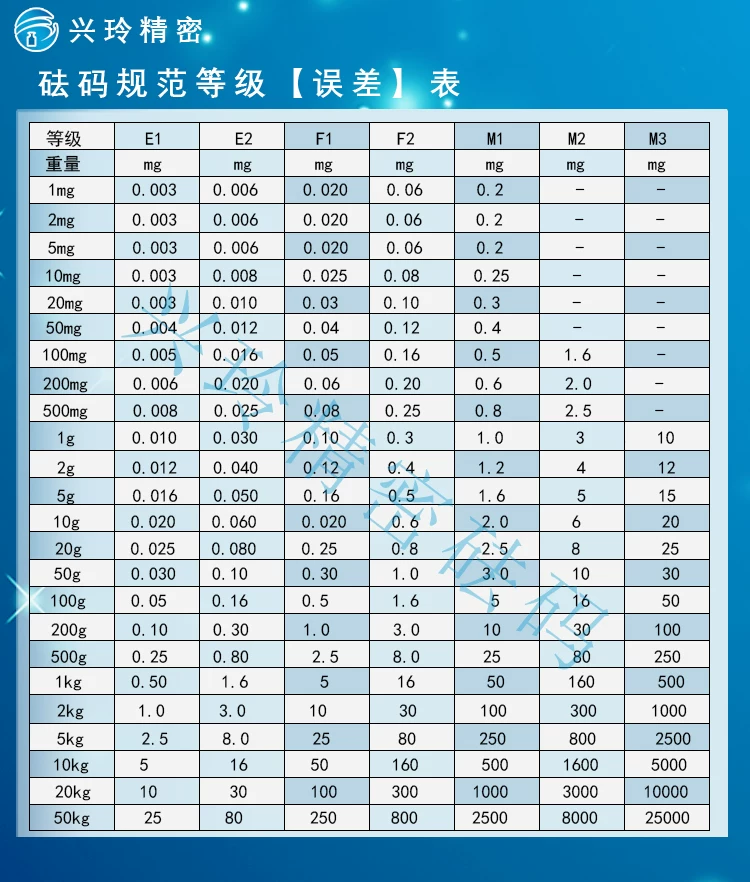
The weight 砝碼 provided with the kit is usually 100g ,M grade, ie 5% tolerance. This is pretty meaningless(~¥7). Just for demo purpose, and not good for calibration.
But if you want to measure 0.1g or less, better to use at least F2 grade weight(1.6% tolerance)

Hysteresis of load cell is something the seller never tells you
ADS1256 library on Arduino and STM32
CS1238, likely a clone of TI ADS123X, Arduino forum
Calibration due to latitude , detail cause up to 1.3%
留言
張貼留言